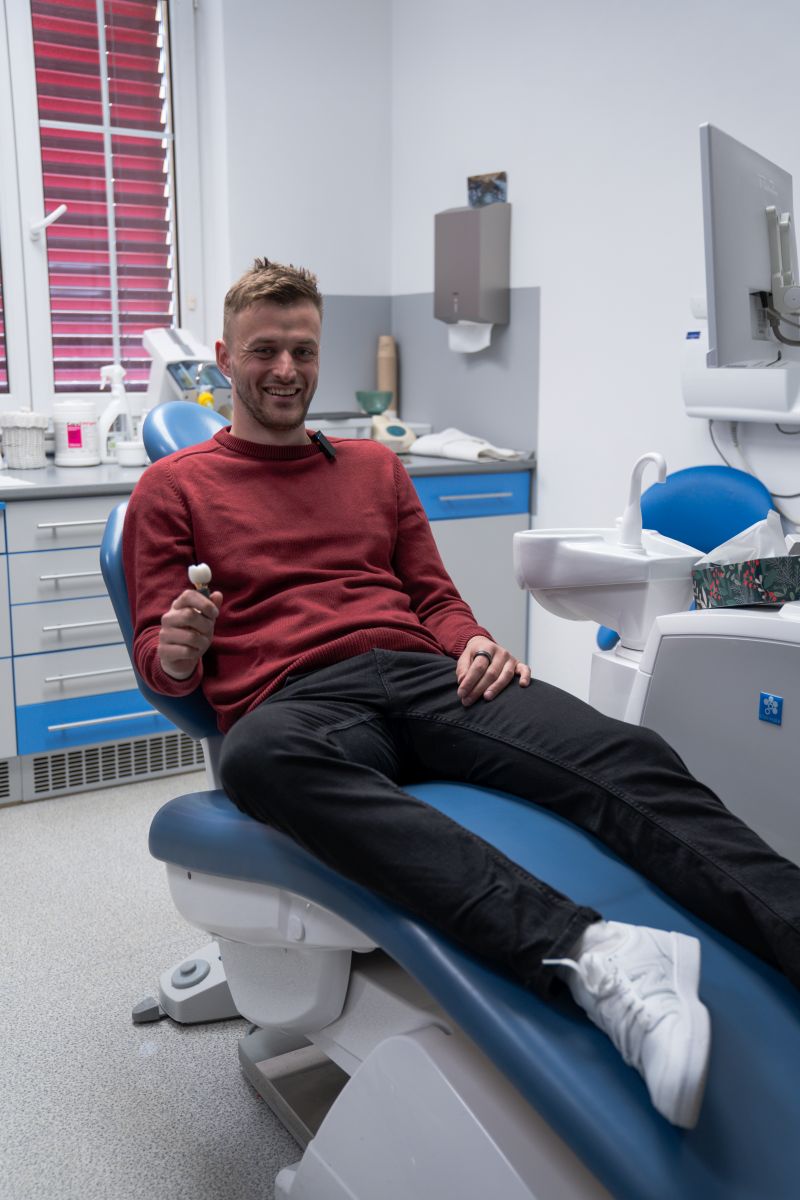
Imagine you’ve just opened a dental practice. You have modern equipment, a qualified team, and years of experience. But the chair stays empty. Patients simply don’t know you exist. Or worse — they do, but they chose the competitor across the street because they had better Google reviews. This is exactly where dental marketing begins — and it’s a discipline that differs from general marketing more than you might expect.
In this guide, we’ll show you which marketing channels actually work for dental practices, where you’re wasting money, and how to start building a steady flow of new patients. Whether you run a small solo practice or a multi-chair clinic, you’ll find actionable steps you can implement right away.
What is dental marketing and why is it unique
Healthcare marketing is not the same as marketing an online clothing store. You can’t offer “50% off root canals” and expect patients to come running. Dental marketing has its own rules — and if you don’t know them, you’ll easily make mistakes that cost you money and reputation.
Regulations and ethics. Healthcare providers are subject to rules that limit how they can advertise. You can’t compare your services to competitors, promise guaranteed results, or use patient photos without informed consent. This doesn’t mean marketing can’t be done — it just requires a different approach.
Trust as the foundation. A patient doesn’t choose a dentist the way they pick a restaurant for lunch. The decision takes longer, is more emotional, and trust plays a crucial role. Nobody wants to experiment with their health. That’s why your marketing must build professional authority and a sense of safety — not push for an immediate purchase.
Local focus. Unlike e-commerce, where customers can be anywhere, a dental practice serves patients within a few miles. Your marketing must be precisely targeted at a specific city or neighborhood. A nationwide TV campaign won’t bring you patients — but a well-optimized Google profile will.
Long-term relationship. A dentist doesn’t sell a one-time product. The goal is to acquire a patient who will return for regular check-ups for years. Marketing therefore serves not only to attract new patients but also to retain existing ones. Reminder emails, educational content, and online reputation management — all of these are part of a dental practice’s marketing strategy.
It’s precisely because of these specifics that dental marketing requires a thoughtful approach that takes into account both the regulatory environment and patient psychology.
Online vs. offline channels for dentistry
When people hear “marketing,” most think of Facebook ads. But an effective marketing strategy for a dental practice combines both online and offline channels. Let’s look at both categories.
Online channels
SEO (search engine optimization). When someone searches for “dentist near me” or “dental implants [city],” you want to be among the top results. SEO for dental practices includes website optimization, quality content creation, and link building. It’s a long-term investment that delivers a steady stream of patients without paying for every click.
Google Maps and Google Business Profile. For local businesses, optimizing your Google Maps profile is absolutely essential. Most patients search for dentists through maps — they see your address, opening hours, office photos, and most importantly, reviews. A well-managed profile can be your strongest marketing tool.
PPC advertising (Google Ads). Paid search advertising delivers quick results. It’s especially useful when opening a new practice or promoting a specific service (teeth whitening, orthodontics). Be mindful of the cost per click, however — it can be high in competitive areas.
Social media. Instagram and Facebook are excellent channels for building your brand and communicating with patients. Social media management for a dental practice includes educational posts, behind-the-scenes glimpses, team introductions, and sharing reviews. Don’t expect direct conversions, though — social media primarily serves to build trust.
Website. Your website is the foundation of your entire online presence. It must be fast, clear, mobile-optimized, and clearly communicate your services, pricing, and contact information. A website without clear structure and calls to action (CTAs) is like a practice without a reception desk — the patient gets lost and leaves.
Content marketing. A blog with expert articles, video answers to common patient questions, infographics about proper hygiene — all of this builds your authority while helping your SEO. Content is an investment that works for you over the long term.
Offline channels
Patient referrals. Still the most effective form of marketing. A satisfied patient recommends your practice to family, friends, and colleagues. You can support this process — for example, simply by asking for a Google review after treatment.
Local partnerships. Collaborating with pediatricians, general practitioners, or pharmacies in your area can bring a steady stream of referrals. Mutual patient referrals are natural and trustworthy.
Community activities. Open house events, prevention talks at local schools, or sponsoring a sports club — these are activities that build awareness of your practice in the community and strengthen local ties.
The key is finding the right mix of channels for your specific situation. A small practice in a smaller town will have a different marketing mix than a large clinic in a major city.
What works (and what doesn’t) in dental marketing
Not all marketing activities deliver the same return. After years of working with dental clients, we have a clear picture of what truly works — and what to avoid.
SEO and Google Maps — the foundation of local visibility
When a patient searches for a dentist, they start with Google. And Google displays two things: a map with three results (the local pack) and organic results below. If you’re not in either, you practically don’t exist.
What to do specifically:
- Complete your Google Business Profile — categories, services, opening hours, photos of the practice and team
- Regularly add posts to your Google Business Profile (news, special offers, tips)
- Optimize your website for local keywords (service name + city)
- Ensure consistent NAP (Name, Address, Phone) across all online directories
- Build local citations on relevant directories and industry portals
SEO isn’t a sprint — it’s a marathon. You’ll see initial results in 3-6 months, but then you have a steady source of patients without paying for every click.
Reviews — the most powerful social proof
Reviews are absolutely critical for dentistry. Studies consistently show that over 80% of patients read reviews before choosing a dentist. And it’s not just about star ratings — patients read specific experiences.
How to handle reviews properly:
- Ask satisfied patients for a review — ideally right after treatment when the experience is fresh
- Make it easy — send an SMS or email with a direct link to your Google profile
- Respond to every review — positive and negative. Show that you value feedback
- Handle negative reviews professionally and constructively. Never argue
- Share reviews on your website and social media as social proof
A practice with 50+ reviews and an average above 4.5 stars has a significantly higher chance of winning a new patient than a competitor with five reviews — even if they have better equipment.
Content marketing — building authority
Patients have questions. “Does an implant hurt?” “How much do braces cost?” “How often should I get a dental cleaning?” If you answer these questions on your website, you’re doing two things at once: building trust and improving your SEO.
What type of content works:
- Articles answering the most common patient questions
- Case studies with before/after photos (with patient consent)
- Short videos explaining procedures simply and clearly
- Infographics about proper dental hygiene
- Team introductions — people want to know who will be caring for them
It’s important that content is written clearly for the general public, not in medical jargon. Patients don’t want to read a scientific study — they want a clear answer to their question.
What doesn’t work
Knowing what not to do is just as important as knowing what to do. Here are the most common mistakes we see in dental practices:
- Generic campaigns without targeting. Advertising “dentist” to an entire country is money thrown away. Dental marketing must be local and precisely targeted.
- Buying social media followers. A thousand fake followers from overseas won’t bring you a single patient. Worse — it damages your credibility and algorithmic reach.
- Ignoring mobile users. Over 70% of dentist searches happen on mobile. A website that doesn’t work on a phone is like locked doors at your practice.
- One-off campaigns without strategy. Paying for a single Facebook ad and then waiting for a miracle doesn’t work. Marketing is a continuous process, not a one-time event.
- Copying competitors. What works for an aesthetic clinic in a city center won’t work for a family practice in a smaller town. Strategy must be tailored to your specific situation.
Why choose a specialized agency
You might be thinking: “Any agency can handle marketing.” Theoretically, yes. In practice, it’s like sending a general practitioner to perform a root canal — technically they’re a doctor too, but the outcome will be different.
Healthcare marketing requires specialized knowledge. An agency that promotes fashion e-commerce won’t know how to properly communicate dental services. They won’t understand regulatory restrictions, won’t grasp the patient decision-making process, and will likely create a campaign that looks like a toothpaste ad — not the communication of a professional practice.
Differences between a generic and specialized agency:
- Industry knowledge: A specialized agency knows that “implantology” and “dental implants” have different search volumes and conversion values. A generic agency discovers this through trial and error — at your expense.
- Regulations: We know what you can and cannot say in healthcare advertising. A generic agency might write “guaranteed pain-free treatment” — and you’ll be dealing with a complaint.
- Benchmarks: We know average conversion rates, cost per patient acquisition, and patient lifetime value in dentistry. We don’t need to guess — we work with data from dozens of practices.
- Content: We can write about dental topics clearly and accurately. We don’t need a week to learn what a sinus lift is or the difference between fixed and removable dentures.
- Processes: We have proven workflows for onboarding new practices, content creation, review management, and performance reporting. We don’t experiment with your budget.
A specialized agency like Prospering Clinic doesn’t necessarily mean more expensive services. On the contrary — thanks to industry experience, you achieve results faster with less budget waste on approaches that don’t work in healthcare.
Another advantage is that a specialized agency understands seasonality in dentistry. They know that demand for whitening grows in spring, that implants have a longer decision cycle, and that orthodontics is most discussed at the start of the school year. This understanding translates into the timing of campaigns and content.
How to start marketing your practice
Theory is great, but what should you actually do? Here’s a concrete step-by-step plan for building your practice’s marketing.
1. Audit your current state. Before you change anything, map out where you stand. What does your Google Business Profile look like? How many reviews do you have? How fast does your website load? What keywords are you ranking for? Without knowing your starting point, you can’t measure progress. We offer a free audit that gives you a clear picture.
2. Fix the basics. Before investing in advertising, make sure your fundamentals are in order:
- Website is fast, clear, and mobile-optimized
- Google Business Profile is fully completed with current information
- Contact information is easy to find
- Website has a clear call to action (book appointment, call)
- You have at least a basic page for every service you offer
3. Start collecting reviews. This is the fastest way to improve your online visibility. Set up a system — after every treatment, send the patient an SMS with a link to your Google review page. Just 2-3 new reviews per month, and in six months you’ll have a significant lead over your competition.
4. Create a content plan. You don’t need to publish an article every day. One quality article per month that answers real patient questions is enough. Write about what patients actually ask you in the office.
5. Invest in SEO. Local SEO is the most effective long-term investment for a practice. Optimize service pages for relevant keywords, build local citations, and work on your link profile.
6. Consider PPC for quick results. If you need patients fast (new practice, new service), Google Ads will bring them within days. But have realistic budget expectations — in competitive areas, expect to pay EUR 2-6 per click.
7. Measure and optimize. Marketing without measurement is shooting in the dark. Track where new patients come from, how much it costs to acquire one patient, and which channels deliver the best return. Adjust your strategy based on data.
Practical checklist to get started:
- Google Business Profile — 100% complete, including photos and services
- Website — fast, mobile, with a clear CTA on every page
- Reviews — a system for regularly collecting new reviews
- Content — at least 1 blog article per month
- SEO — service pages optimized for local keywords
- Social media — regular posts (2-3x per week)
- Analytics — Google Analytics and Search Console set up and monitored
Conclusion
Dental marketing isn’t rocket science, but it requires a systematic approach and understanding of industry specifics. The most important thing is to start — and start right. Fix the basics, collect reviews, publish useful content, and invest in local SEO. The results will come.
If you don’t want to experiment on your own and are looking for a partner who understands dental marketing, we’re happy to help. Start with a free audit of your online presence — within a few days you’ll receive specific recommendations on what to improve and where you have the greatest potential for growth.
Your chair doesn’t have to stay empty. The right patients just need to know you exist.